The COVID-19 pandemic radically changed the way freelance artists work. If anything became clear, it’s how important it is not to rely on just one source of income. Today, I want to share how diversification allowed me to push through during the toughest moments. I’ll also talk about the impact of artificial intelligence (AI) on our industry, how social media can influence (and limit) creativity, and why it’s essential to be open to new tools and opportunities. In the end, the key to moving forward as an artist is to be flexible and explore different paths without fear.
Diversification: A Freelancer's Lifeline
In recent years, it became clearer to me that, as freelance artists, we can’t afford to stay in our comfort zones. If we focus on just one skill or one source of income, we risk falling behind. Industries are constantly changing, and what worked yesterday may not be enough tomorrow. The pandemic was a brutal reminder of this. That’s why I want to share how the crisis transformed the way we work and how diversifying was what kept me afloat when everything else was shutting down.
The Post-Pandemic Boom and Bust: A Harsh Reminder
During the pandemic, many of us experienced a surge in work. The world was at a standstill, but people, confined to their homes, demanded entertainment more than ever. It was one of the busiest times I’ve ever had, although it wasn’t the best for my personal health. However, work-wise, it was incredible.
But after that boom came the bust. The companies that had overproduced content started cutting back, and many freelancers, myself included, were left without work. I went almost two years with few projects, and that experience taught me an important lesson: we can’t rely on just one field or income stream to sustain our careers. Diversification went from being a choice to a necessity.
Adapting to Survive
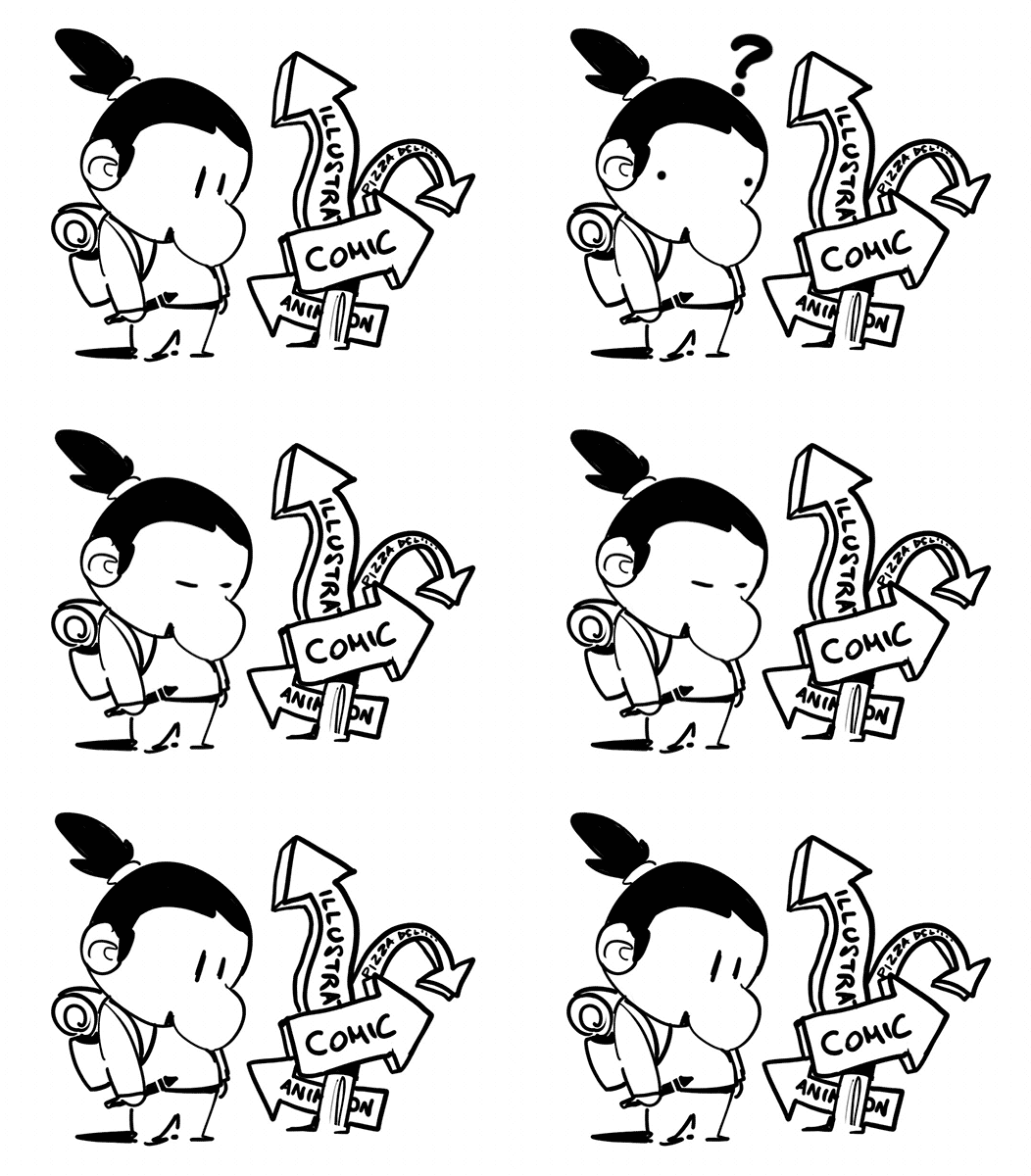
The most valuable thing I learned during those years was that, as artists, we must be willing to change and adapt. My main focus has always been illustration and concept art, but when those jobs started drying up, I had to look toward other avenues, like comics. Even though it wasn’t my specialty or my biggest source of income, it was what kept me going.
Diversification doesn’t just mean accepting different types of projects; it also means learning new tools and improving the techniques we already have. During that time, I updated myself on new software, optimized my workflow, and learned new techniques to meet market demands. It’s not just about changing what we do, but being prepared for whatever comes next.
Artificial Intelligence: Creative Ally or Threat?
AI is one of those topics that always sparks debate among artists. While some see it as a threat that could take our jobs, others see it as a tool that can help with repetitive or technical tasks. AI has evolved far beyond generating images; it can translate texts, summarize documents, and even debate theories. Today, anyone can leverage this technology with just a few clicks.
But there’s something we should never forget: while AI makes many things easier, it cannot replicate what makes us unique as artists. Our vision, ideas, and creativity are irreplaceable. AI can be helpful for technical tasks, but it will never be able to tell stories or convey emotions the way humans do.
This is a topic that definitely deserves a full post, as its impact on the industry is enormous and requires a more detailed analysis.
Social Media and the Double-Edged Sword: “From Comfort Zone to Cancel Mob”
Social media is a double-edged sword. On one hand, it allows us to showcase our work to a global audience, but it has also created a kind of digital moral code where some people feel entitled to dictate what’s “right” or “wrong” in art.
We’ve seen artists get attacked for using new tools like photobashing, 3D, or even AI. If you don’t follow the rules set by certain “influencers,” you risk being canceled. Many artists end up losing their creative identity due to the pressure to gain likes and acceptance. Diversification also plays an important role here: not just in terms of skills, but also in creative approaches. We shouldn’t just follow trends because they’re popular; the key is to maintain our original voice.
I’ve seen colleagues be unfairly accused of using AI in their work, and even though they proved the accusations were false, the criticism continued. This kind of attack can cost an artist their livelihood, and that’s something we need to change. I’m convinced that future generations will correct these mistakes.
Creative Freedom and the Value of Originality
At the end of the day, originality and creative freedom are our greatest assets. We can’t let social media or fleeting trends dictate how we do our work. Being an artist means taking risks, stepping out of the comfort zone, and trying new things. Although technology is advancing at an incredible pace, what truly stands out is what dares to be different.
Conclusion: Diversify to Thrive
Diversification isn’t just a survival strategy; it’s a growth opportunity. As artists, we must be willing to explore new paths and learn new skills without being afraid to change course when necessary. My advice is simple: try something new, whether it’s in another field or a different technique. The only way to thrive is to adapt, but always keep our creative freedom at the core of everything we do.
The future is uncertain but bright. Paths are never straight, and sometimes taking a detour doesn’t mean going backward, but gaining an experience that will make the final destination much more rewarding.
Diversificación: la clave para sobrevivir como artista freelance
La pandemia de COVID-19 cambió radicalmente la forma en que los artistas freelance trabajamos. Si algo quedó claro es lo importante que es no depender de una sola fuente de ingresos. Hoy quiero contarles cómo la diversificación fue lo que me permitió salir adelante en los momentos más difíciles. También voy a hablar sobre el impacto de la inteligencia artificial (IA) en nuestra industria, cómo las redes sociales pueden influir (y limitar) la creatividad, y por qué es esencial estar abiertos a nuevas herramientas y oportunidades. Al final, la clave para seguir avanzando como artistas es ser flexibles y explorar diferentes caminos sin miedo.
Diversificación: La salvación de un freelance
En los últimos años, me quedó más que claro que, como artistas freelance, no podemos darnos el lujo de quedarnos en nuestra zona de confort. Si nos enfocamos solo en una habilidad o una fuente de ingresos, corremos el riesgo de quedarnos atrás. Las industrias están en constante cambio, y lo que funcionaba ayer, puede no ser suficiente mañana. La pandemia fue un recordatorio brutal de esto. Por eso, quiero compartir cómo la crisis transformó la forma en que trabajamos y cómo diversificarme fue lo que me mantuvo a flote cuando todo se detenía.
El auge y la caída post-pandemia: Un recordatorio brutal
Durante la pandemia, muchos de nosotros experimentamos un auge en el trabajo. El mundo estaba paralizado, pero la gente, confinada en sus hogares, demandaba entretenimiento más que nunca. Fue uno de los momentos en los que más trabajé, aunque en términos de salud personal no fue el mejor. Laboralmente, sin embargo, fue increíble.
Pero después de esa explosión de trabajo, vino el desplome. Las empresas que habían producido contenido en exceso empezaron a recortar, y muchos freelance, incluido yo, nos quedamos sin trabajo. Estuve casi dos años con proyectos escasos, y esa experiencia me enseñó una lección importante: no podemos depender de un solo rubro o fuente de ingresos para mantener nuestras carreras. La diversificación pasó de ser una opción a una necesidad.
Adaptarse para sobrevivir
Lo más valioso que aprendí durante esos años fue que, como artistas, debemos estar dispuestos a cambiar y adaptarnos. Mi enfoque principal siempre ha sido la ilustración y el concept art, pero cuando esos trabajos empezaron a escasear, tuve que mirar hacia otros horizontes, como el cómic. Aunque no era mi especialidad ni mi mayor fuente de ingresos, fue lo que me permitió seguir adelante.
Diversificarse no solo significa aceptar diferentes tipos de proyectos, sino también aprender nuevas herramientas y mejorar las técnicas que ya tenemos. Durante ese tiempo, me puse al día con nuevos softwares, optimicé mi flujo de trabajo y aprendí nuevas técnicas para enfrentar las demandas del mercado. No se trata solo de cambiar lo que hacemos, sino de estar preparados para lo que venga.
La inteligencia artificial: ¿Aliada o amenaza creativa?
La inteligencia artificial (IA) es uno de esos temas que siempre genera debate entre los artistas. Mientras algunos la ven como una amenaza que podría quitarnos trabajo, otros la ven como una herramienta que puede ayudarnos con tareas repetitivas o técnicas. La IA ha evolucionado mucho más allá de generar imágenes; puede traducir textos, resumir documentos, e incluso debatir teorías. Hoy, cualquier persona puede aprovechar esta tecnología con unos cuantos clics.
Pero hay algo que nunca debemos olvidar: aunque la IA facilita muchas cosas, no puede replicar lo que nos hace únicos como artistas. Nuestra visión, ideas y creatividad son insustituibles. La IA puede ser útil en tareas técnicas, pero nunca podrá contar historias o transmitir emociones como lo hacemos los humanos.
Este es un tema que definitivamente merece un post completo, porque su impacto en la industria es enorme y merece un análisis más detallado.
Redes sociales y la doble moral: "From comfort zone to cancel mob"
Las redes sociales son una espada de doble filo. Por un lado, nos permiten mostrar nuestro trabajo a una audiencia global, pero también han creado una especie de moral digital donde algunas personas sienten que tienen el derecho de dictar lo que es “correcto” o “incorrecto” en el arte.
Hemos visto cómo se ataca a artistas que usan nuevas herramientas como el photobashing, el 3D o incluso la IA. Si no sigues las reglas que imponen ciertos “influencers”, corres el riesgo de ser cancelado. Muchos artistas terminan perdiendo su identidad creativa por la presión de ganar likes y aceptación. La diversificación también juega un papel importante aquí: no solo en cuanto a habilidades, sino también en enfoques creativos. No debemos seguir la corriente solo porque está de moda; la clave está en mantener nuestra voz original.
He visto cómo colegas han sido acusados injustamente de usar IA en su trabajo, y aunque demostraron que las acusaciones eran falsas, las críticas siguieron. Este tipo de ataques pueden costarle a un artista su sustento, y eso es algo que debemos cambiar. Estoy convencido de que las nuevas generaciones sabrán corregir estos errores.
La libertad creativa y el valor de la originalidad
Al final del día, la originalidad y la libertad creativa son nuestros mayores tesoros. No podemos permitir que las redes sociales o las modas del momento dicten cómo hacemos nuestro trabajo. Ser artista significa arriesgarse, salir de la zona de confort y probar cosas nuevas. Aunque la tecnología avanza a un ritmo increíble, lo que realmente destaca es lo que se atreve a ser diferente.
Conclusión: Diversificarse para prosperar
Diversificarse no es solo una estrategia de supervivencia, es una oportunidad de crecimiento. Como artistas, tenemos que estar dispuestos a explorar nuevos caminos y aprender nuevas habilidades sin miedo a cambiar de rumbo cuando sea necesario. Mi consejo es simple: prueba algo nuevo, sea en otro rubro o una técnica diferente. La única manera de prosperar es adaptarse, pero siempre manteniendo nuestra libertad creativa como el centro de todo lo que hacemos.
El futuro es incierto, pero brillante. Los caminos nunca son rectos, y a veces tomar un desvío no significa retroceder, sino adquirir una experiencia que hará que el destino final sea mucho más gratificante.